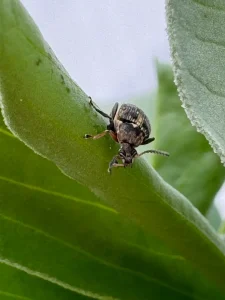
Disease & Pest Resistance
WP2: Enhance genetic resilience against pests and diseases.
WP2 Overview
Pests and diseases remain a major challenge for UK pulse growers. Problems like root rot, downy mildew, aphid-transmitted viruses, and bruchid beetle can slash yields and quality, and climate change is making these threats worse. With fewer chemical control options available, genetic resistance is the most sustainable solution.
Guided by findings from earlier PCGIN work and ongoing engagement with breeders, this work package ensures that its outputs align with the highest-priority resistance challenges. It uses advanced genetic tools and diversity panels to identify resistance genes and convert findings into practical breeding tools, such as resistant germplasm and molecular markers.
WP2 will aim to:
- Pinpoint resistance genes for major diseases like downy mildew and root rot.
- Develop markers and gene-editing strategies so breeders can introduce resistance quickly and precisely.
- Screen for virus resistance and tackle emerging pests like bruchid beetle.
By combining cutting-edge genomics with traditional breeding, WP2 will provide breeders with the tools they need to develop varieties that can withstand pests and diseases. This will help reduce losses, cut reliance on chemicals, and support sustainable UK pulse production.
Root rot resistance
Root rot is a soil-borne disease caused by fungi and oomycetes. It can persist in soil for decades, making crop rotation difficult. WP2 will screen pea and faba bean diversity panels for resistance, identify genetic loci using GWAS, and develop markers for breeding.
Why it matters: Root rot severely limits pea production in the UK – genetic resistance offers a sustainable solution.
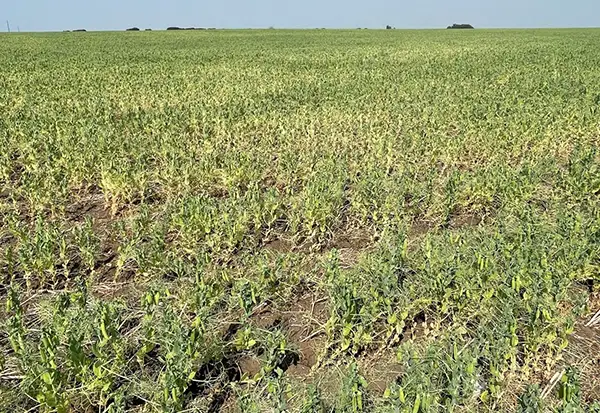
Root and foot rot disease in peas
Root rot is one of the most damaging soil-borne diseases affecting pea production worldwide. It is caused by a complex of pathogens including Aphanomyces euteiches, several Fusarium species, Didymella pinodella, Pythium, and Rhizoctonia. These pathogens attack roots and reduce water and nutrient uptake. Affected fields often display large patches of yellow, stunted plants with poorly developed root systems, resulting in yield losses of 10-30% or more, and severe infection can result in complete yield loss.
The disease is difficult to manage because these pathogens can survive in soil for 10–15 years, even without a pea crop. Wet, compacted soils, short crop rotations, and climate change (with alternating drought and heavy rainfall) all increase the risk.
PCGIN research: understanding the root of the problem
PCGIN researchers, based at the John Innes Centre, recently published a comprehensive review of pea root rot disease. This work highlights why root rot is such a challenge and explores new strategies to combat it. The team examined:
- Pathogen biology and interactions: Root rot is not a single infection but a synergistic complex. For example, Aphanomyces often initiates infection, followed by opportunistic Fusarium species that worsen symptoms.
- Environmental triggers: Wet soils and poor drainage create ideal conditions for disease establishment.
- Current limitations: No effective chemical treatments exist; cultural practices like long rotations (6–8 years) are the main control method but are hard to implement.
What did they find?
In the review they report several key advances:
- Early detection tools: Traditional lab tests are slow and costly. Molecular diagnostics such as qPCR and LAMP (Loop-mediated isothermal amplification) offer rapid, accurate, and even portable testing – potentially allowing growers to assess disease risk before planting.
- Genetic resistance: Resistance to root rot is complex and involves many genes (quantitative resistance). The team summarised major genetic regions (QTL) linked to resistance against Aphanomyces and Fusarium, and highlighted traits like stronger root architecture and production of antifungal compounds (e.g., pisatin).
- Breeding strategies: Wild pea relatives (Pisum elatius, P. fulvum) hold untapped resistance genes. Modern tools such as genome-wide association studies (GWAS) and CRISPR gene editing can accelerate breeding for multi-pathogen resistance.
- Soil microbiome role: Beneficial microbes can suppress pathogens or boost plant defenses. Understanding these interactions could lead to new biocontrol approaches.
Looking ahead
The review emphasises an integrated approach of combining genetic resistance, rapid diagnostics, and soil health practices. Rather than aiming for complete pathogen elimination, the focus is on field tolerance – developing plants that maintain yield even under disease pressure.
Read the full article:
Trenk, N. K., Pacheco-Moreno, A., & Arora, S. (2024). Understanding the root of the problem for tackling pea root rot disease. Frontiers in Microbiology, 15. https://doi.org/10.3389/FMICB.2024.1441814
For practical guidance on managing pea foot rot, PGRO provides detailed crop husbandry advice. This includes recommendations on crop rotation (peas should be grown no more than one year in five on the same field) and soil testing to assess pathogen risk. For full details, visit the PGRO Crop Husbandry Guide.
Downy mildew resistance
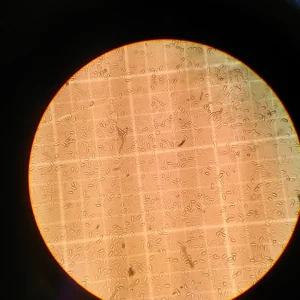
Downy mildew is a major concern for both pea and faba bean growers, especially with restrictions on chemical treatments. WP2 will identify new resistance genes, validate them, and develop markers for breeders. Long-term, we aim to stack multiple genes for durable resistance.
Why it matters: Downy mildew causes millions in annual losses – genetic resistance is key to protecting yields.
Pea downy mildew
Downy mildew (DM) is a serious disease in peas, caused by the pathogen Peronospora viciae f. sp. pisi. It thrives in cool, humid conditions and can devastate crops, leading to yield losses of up to 80%. Traditionally, chemical fungicides have been used to manage DM, but growing environmental concerns and tighter regulations mean we need safer, sustainable alternatives.
A collaboration of researchers, including members of PCGIN, has published exciting new work on biological control as a sustainable solution. Their study explored whether beneficial microbes, specifically strains of Bacillus velezensis and Pseudomonas fluorescens, could act as microbial biological control agents (MBCAs) against the pea downy mildew pathogen. These bacteria are well known for producing natural antimicrobial compounds and promoting plant health, but their effectiveness against DM in peas had never been tested before.
What did they do?
The team carried out a series of experiments:
- In vitro tests: Spores of the DM pathogen were mixed with bacterial cells or their culture filtrates. Both Bacillus and Pseudomonas completely inhibited spore germination at high concentrations and significantly reduced germination even at lower levels.
- In planta experiments:
- Foliar sprays of bacterial cells or filtrates on infected pea plants reduced pathogen sporulation by 80-96%.
- Soil drenching was particularly effective for cold-adapted Bacillus strains and Pseudomonas, cutting pathogen biomass by up to 90%.
- Combining Bacillus and Pseudomonas in a cocktail spray produced a synergistic effect, reducing spore loads by 93-97%.
- Safety check: Healthy pea plants sprayed with these biocontrol agents showed no visible damage, confirming their compatibility with crop use.
Key Findings
- Bacillus and Pseudomonas strains are highly effective in suppressing downy mildew in peas.
- Foliar application of these microbes or their filtrates offers a practical, eco-friendly alternative to chemical fungicides.
- Combining strains can boost effectiveness and durability of control.
- No negative effects were observed on healthy plants, supporting their potential for safe use.
This is the first report of successful biocontrol of pea downy mildew using microbial agents. It opens the door to sustainable disease management strategies that reduce reliance on chemicals and support environmental goals.
Read the full article:
Okechukwu, E. C., Jimenez-Quiros, C., Baysal, Ö., Kocamaz, S., Arıkan, B., Webb, A., Wood, T., Arora, S., Domoney, C., Studholme, D. J., & Tör, M. (2025). Pea-Saving Partners: Bacillus and Pseudomonas Combat Downy Mildew in Pea Crops. Plant Pathology. https://doi.org/10.1111/PPA.70095
Gene editing for durable resistance
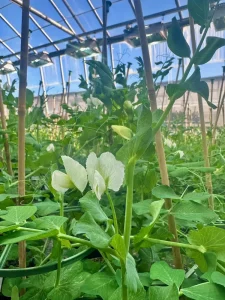
CRISPR/Cas tools will be used to engineer resistance by targeting susceptibility genes or enhancing natural resistance loci. This approach complements traditional breeding and accelerates delivery of resistant varieties.
Why it matters: Gene editing can cut breeding time in half and future-proof UK crops against evolving pathogens.
Virus resistance in pea
Aphid-transmitted viruses like PEMV, PSbMV, and TuYV are becoming more common with climate warming. WP2 will screen pea diversity panels for resistance and lay the groundwork for multi-virus resistance strategies.
Why it matters: Virus infections reduce yield and quality – breeding resistant varieties is essential for crop security.
A recent survey of virus in pea crops, funded by the AHDB and led by Fera, provides information on the most pressing virus pressures facing the industry. Read their report: Surveillance of virus diseases in UK pea crops | AHDB
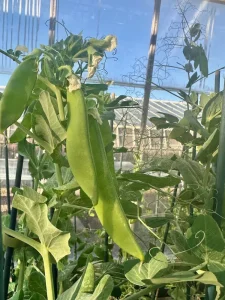
Virus survey in Faba bean

Little is known about viruses affecting faba bean in the UK. WP2 will conduct a survey with Fera Science Ltd to identify viruses as a first step to understand the problem and enable future research.
Bruchid beetle resistance
Bruchid beetle is an emerging pest that damages seeds and reduces market value. WP2 will study resistant lines, analyse pod and seed traits, and explore genetic solutions.
Why it matters: Bruchid beetle threatens UK faba bean production – genetic resistance is the most sustainable control.