
Peas
Pisum sativum L.
Pea (Pisum sativum L.) overview
Pea (Pisum sativum L.) is a cool-season grain legume widely grown for food and feed, and is one of the oldest domesticated crops in temperate agriculture. Pea crops are typically grown as vining or semi-dwarf types suited to modern combine harvesting. Plants have slender stems and tendrils that help support growth in the field. Their flowers are usually white (or purple) and are self-pollinating, ensuring reliable seed set for uniform yields. Pods are smooth and usually green (or purple), each containing 4-10 round seeds. Depending on end use, peas are classified as dry peas (for protein and starch), green peas (for fresh or frozen vegetables), or specialty types such as marrowfat peas for snack and processing markets.
According to FAOSTAT, the UK is among Europe’s leading producers of dry peas, with significant acreage dedicated to both human food and animal feed markets. In the UK, peas are generally sown in early spring, although autumn sowing is possible in milder areas. Cool weather during vegetative growth and flowering is ideal, while excessive heat or drought during pod filling (June) can reduce yield and quality. Like other legumes, peas fix atmospheric nitrogen through symbiosis with Rhizobium bacteria, improving soil fertility and reducing reliance on synthetic fertilisers in crop rotations.
Pea is predominantly self-pollinating, with outcrossing rates typically below 1%, which simplifies breeding but limits natural genetic diversity. Flowers are hermaphroditic and usually fertilise before opening, so pollinators play a minor role compared to partially outcrossing species like faba bean. This self-pollination influences breeding strategies, which rely heavily on controlled crosses and modern genomic tools to introduce new variation.
Historical importance of pea and Mendel
Pea holds a unique place in the history of science as the crop that enabled Gregor Mendel, an Augustinian monk, to uncover the fundamental principles of heredity in the mid-19th century. Mendel’s meticulous experiments with pea plants – chosen for their clear, contrasting traits such as flower colour, seed shape, and pod form – led him to formulate the laws of segregation and independent assortment, which became the foundation of modern genetics. His work demonstrated that traits are inherited as discrete units (now known as genes), revolutionising biology and agriculture. Although Mendel’s findings were initially overlooked, their rediscovery in the early 20th century cemented pea as the “model organism” that gave birth to classical genetics and influenced plant breeding worldwide.
Genomic characteristics
Pea has a relatively large genome of about 4.45 gigabases – smaller than faba bean but still challenging compared to cereals. The genome is rich in large repetitive sequences, which historically slowed progress in molecular breeding. However, the release of a chromosome-scale reference genome in 2019 and subsequent pan-genome resources are accelerating research, enabling high-resolution genetic mapping, genome-wide association studies, and genomic selection for complex traits such as yield stability, disease resistance, and seed quality.
Nutritional characteristics and market context
Pea seeds are valued for their high protein content (typically 20-25%) and starch, making them an important source of plant-based protein for food and feed. In the UK, peas are used in:
- Human food markets: Frozen and canned peas, snack products, and pea flour for plant-based foods.
- Animal feed: Dry peas provide energy and protein for livestock, offering a sustainable alternative to imported soybean meal.
- Emerging markets: Pea protein isolates for meat substitutes and sports nutrition.
Protein Composition
- Storage proteins are mainly globulins (legumin 11S and vicilin 7S), similar to other legumes.
- Legumin contributes to gelling and emulsifying properties, while vicilin enhances solubility and foaming; both important for different food applications.
- Breeding aims to optimise the legumin:vicilin ratio and increase sulphur-containing amino acids (methionine, cysteine) for improved nutritional quality.
Anti-Nutritional Factors
Trypsin inhibitors and tannins: Affect protein digestibility; low-tannin varieties are preferred for feed.
Lectins and saponins: Influence palatability and safety; breeding targets reduced levels.
Off-flavour compounds: Lipoxygenase activity can cause beany flavours in food products; low-lipoxygenase lines are desirable for processing.
Phytate: Binds essential minerals such as iron, zinc, and calcium, reducing their bioavailability; breeding aims to lower phytate levels to improve nutritional quality.
Food use
As peas are an established and well adapted crop for the UK, they are central to initiatives promoting sustainable home-grown diets. Beyond eating cooked whole peas, their protein can be used in meat alternatives and dairy substitutes such as ‘textured vegetable proteins’ (TVPs), as plant-based protein products.
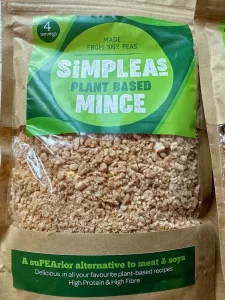
Hodmedod’s, an innovative novel premium crop specialist, champion British-grown peas in flours, snacks, and everyday foods.
For example:
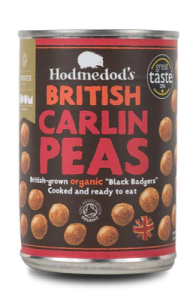
Carlin peas (Pisum sativum heritage type)
Carlin peas are a traditional UK crop with heritage appeal, often marketed as “black badgers” or “carlin peas.”
- Well adapted to UK conditions and fits easily into existing pea agronomy.
- Strong cultural and culinary heritage, creating niche opportunities for premium markets and food innovation.
- Potential for branding as a sustainable, locally sourced protein ingredient.

Pink peas
The Flamingo spring pea stands out by the vibrant orange cotyledon showing through its semi-transparent white skin. This unique variety is featured on the PGRO Pulse Descriptive List, which led to the introduction of an entirely new category for pink peas. These distinctive peas are now reaching consumers through an exciting collaboration between Hodmedod’s and Holland & Barrett , which brings this innovative ingredient to a wider audience.
Further reading...
For readers interested in the broader context of pea genetics, breeding, and genomics:
- Feng, C. et al. (2025). Genomic and genetic insights into Mendel’s pea genes. Nature 2025 642:8069, 642(8069), 980–989. https://doi.org/10.1038/s41586-025-08891-6
- Yang, T. et al. (2022). Improved pea reference genome and pan-genome highlight genomic features and evolutionary characteristics. Nature Genetics 2022 54:10, 54(10), 1553–1563. https://doi.org/10.1038/s41588-022-01172-2